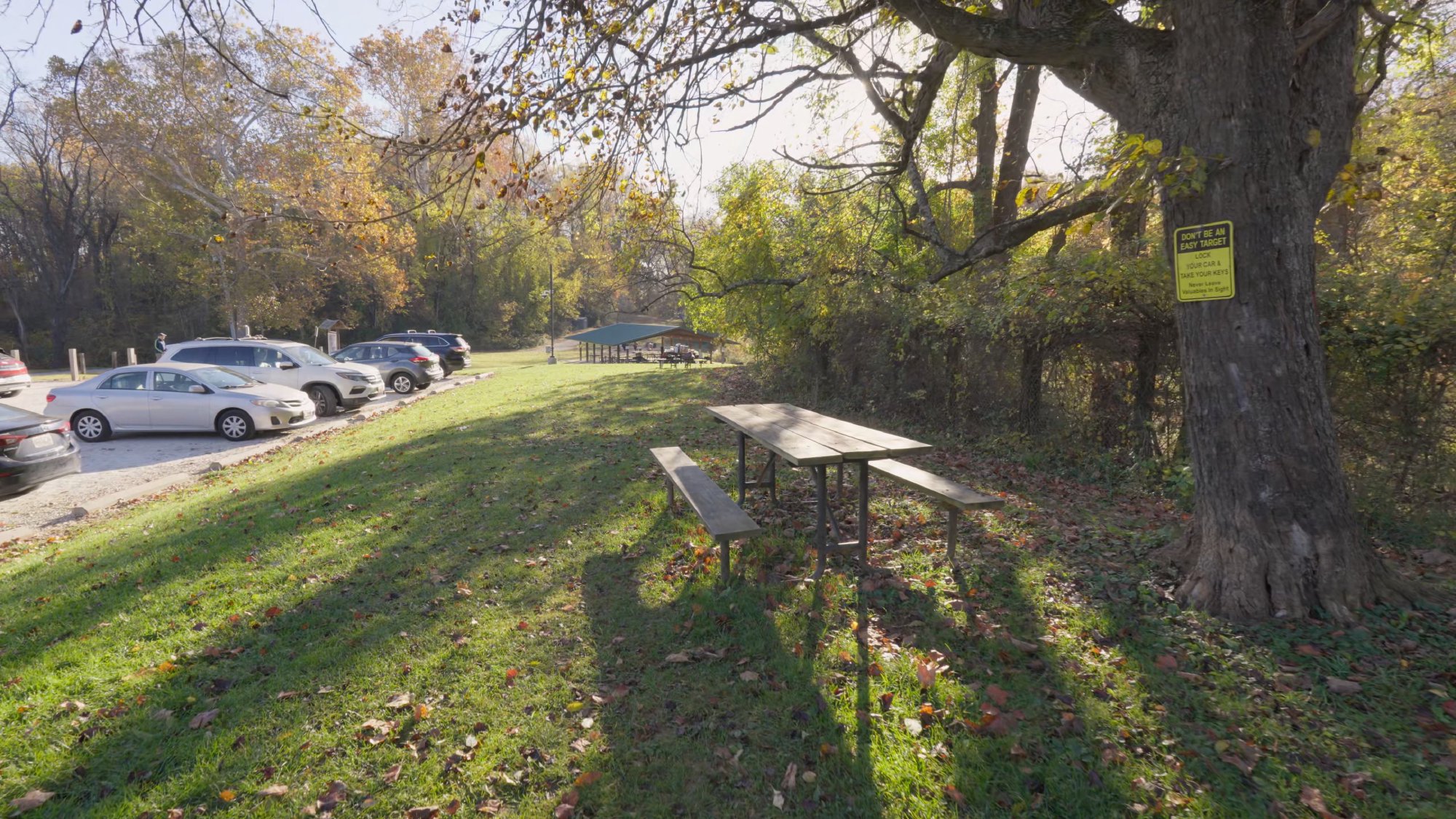
The Miners Trail is a short, black-blazed trail at Oregon Ridge Park in Cockeysville, running through the site of Oregon, a company town where iron ore and marble were mined in the mid-1800s. The trail itself is about 0.3 miles and fairly level. This walk adds the mown paths through the meadow north of it and returns over the hill behind the Oregon Ridge Nature Center on the Loggers Trail, making a loop of about a mile and a half.
- Distance
- 1.6 mi
- Elevation gain
- 121 ft
- Route
- Loop
Difficulty: Easy
The trail#
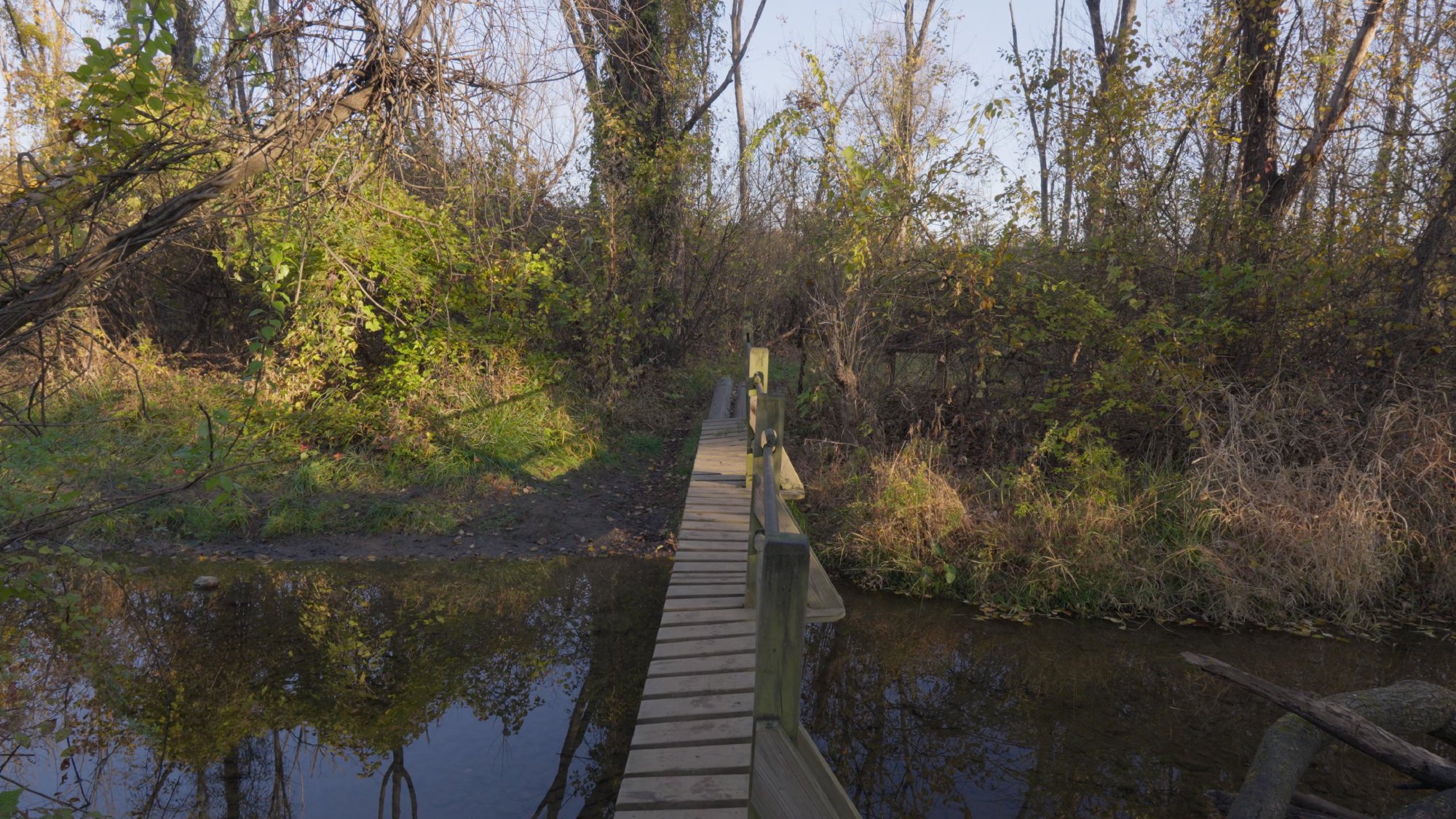
Start at the east end of the Miners Trail, by the reconstructed springhouse near the parking lots above the lake. Head west on the Miners Trail, over a short boardwalk and a small wooden footbridge across a stream.
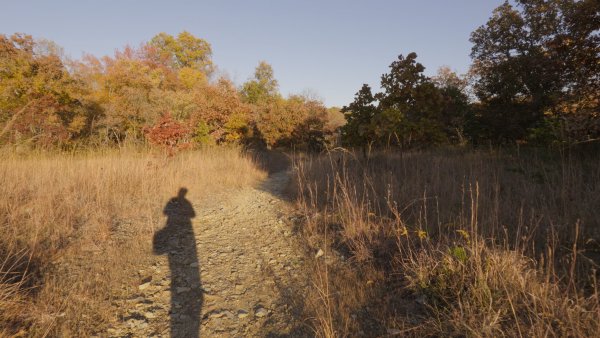
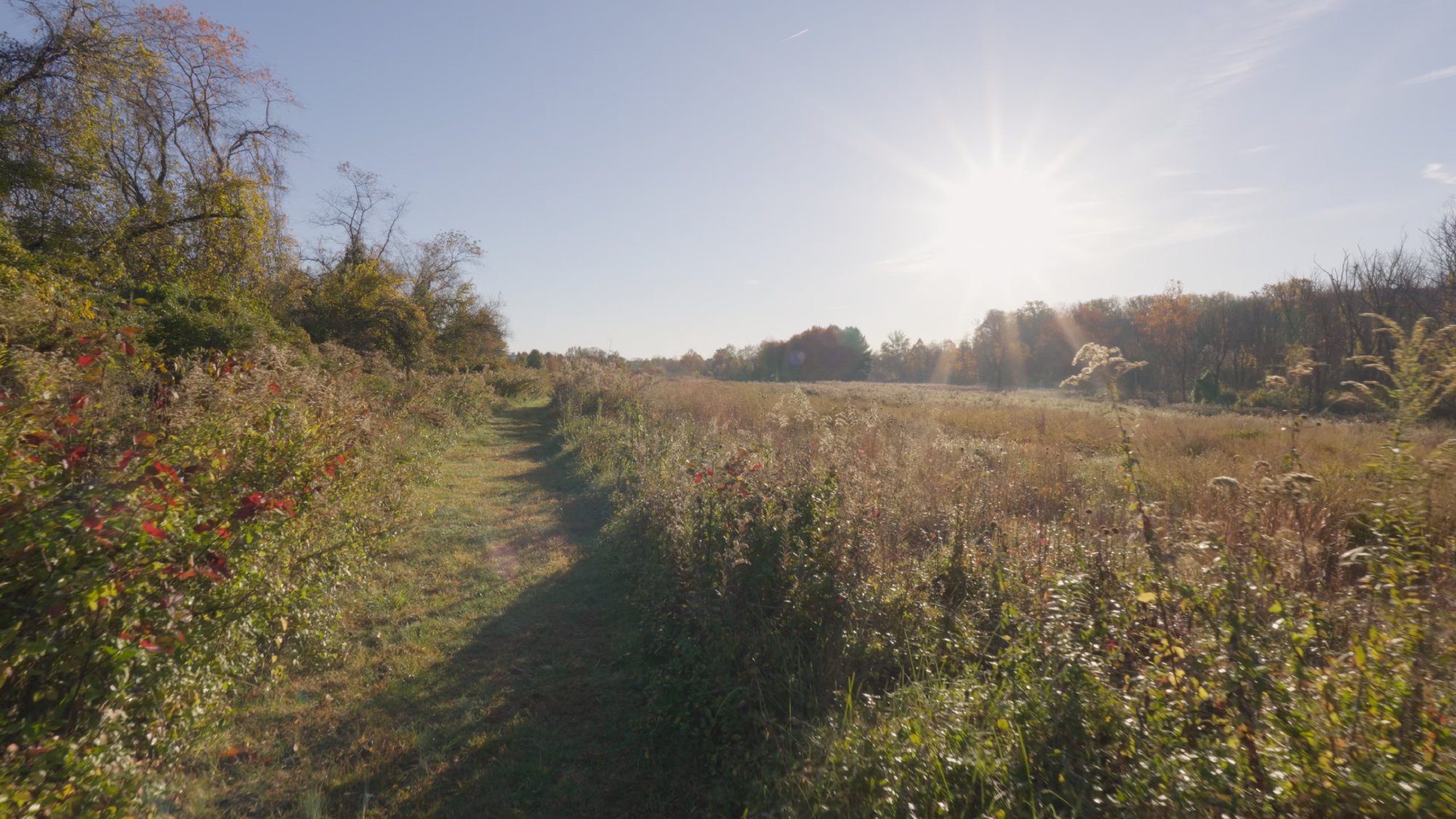
Just past the bridge, the walk leaves the Miners Trail for the mown paths through the meadow to the north, where the village once stood. The paths loop out to the meadow’s far edge and back, then return to the Miners Trail, which continues west and rises gently to the Archery Range sign at its western end.
From there, head south past the paved Marble Quarry Loop and the gardens behind the Nature Center. The path climbs past the Iron Ore Pit sign to the red-blazed Loggers Trail. Follow the Loggers Trail south and east around the Nature Center, up to the walk’s high point at the junction with the tan Ridge Trail, about 100 feet above the meadow. The Loggers Trail then descends east, across the blue-blazed Laurel Trail, back to the parking lots above the lake.
The town of Oregon#
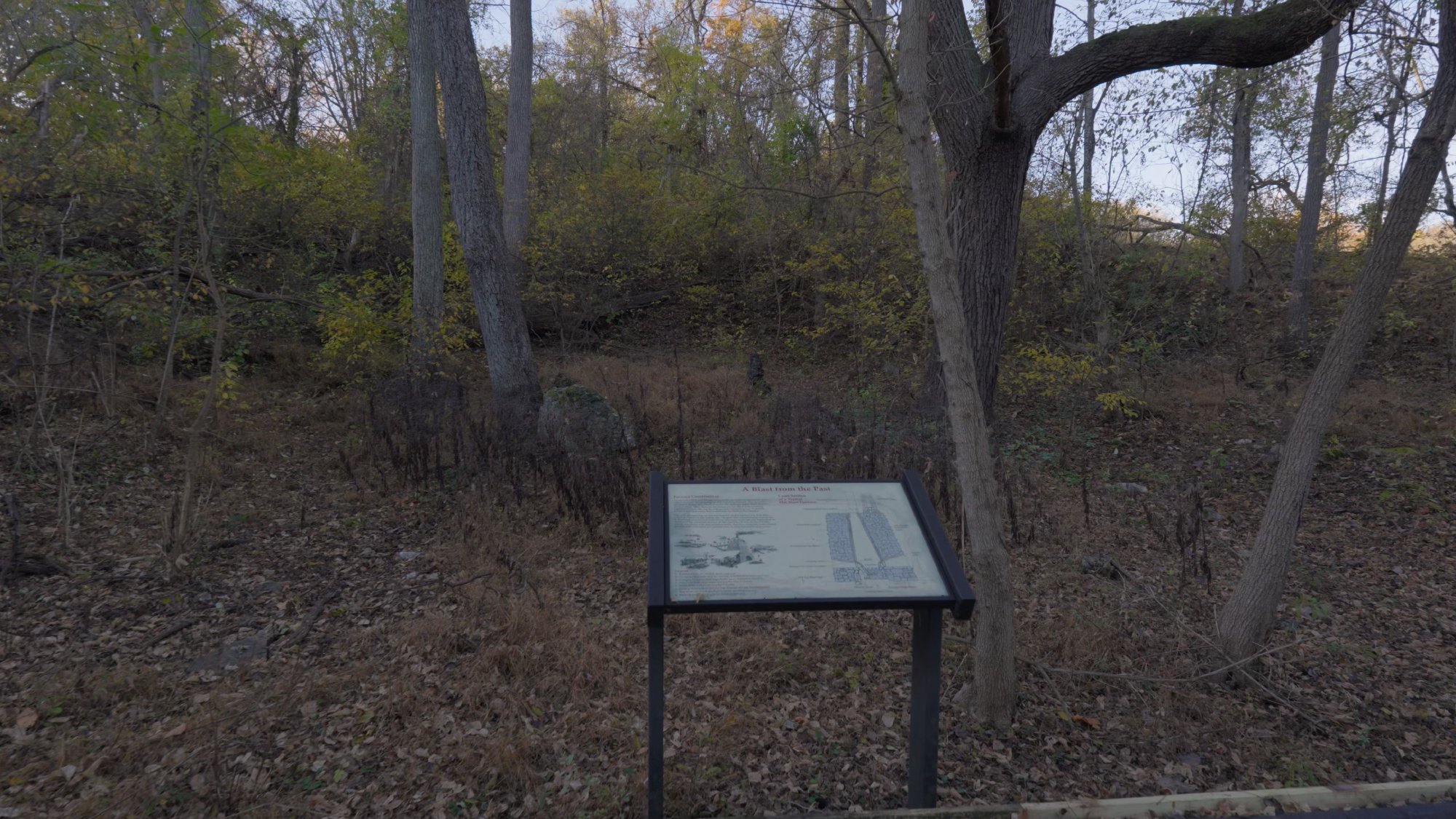
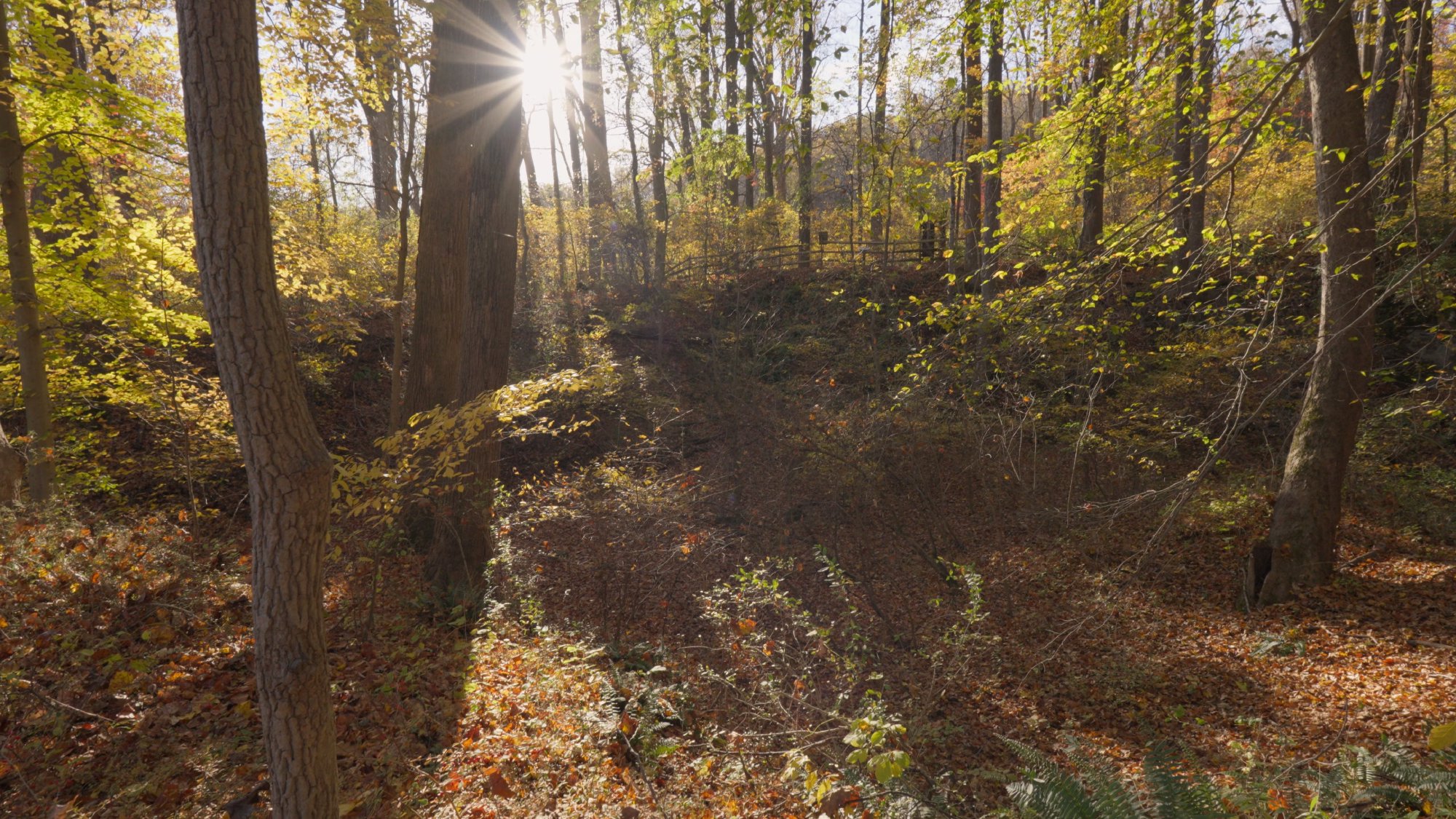
A high-grade marble seam runs through this valley, and the ridge to the south held iron ore. Both were found in the 1830s, and between about 1840 and 1870 the company town of Oregon grew up around the mines and an iron furnace on the Oregon Branch stream. The furnace operated from 1844 to 1858 and at its peak produced 4,500 tons of pig iron a year. Marble went into the furnace as flux, which draws impurities out of the molten iron, and into buildings. The iron ore came out of about 48 open pits along the ridge south of the town. Most are now small, wooded ravines, like the one at the Iron Ore Pit sign on the climb up to the Loggers Trail.
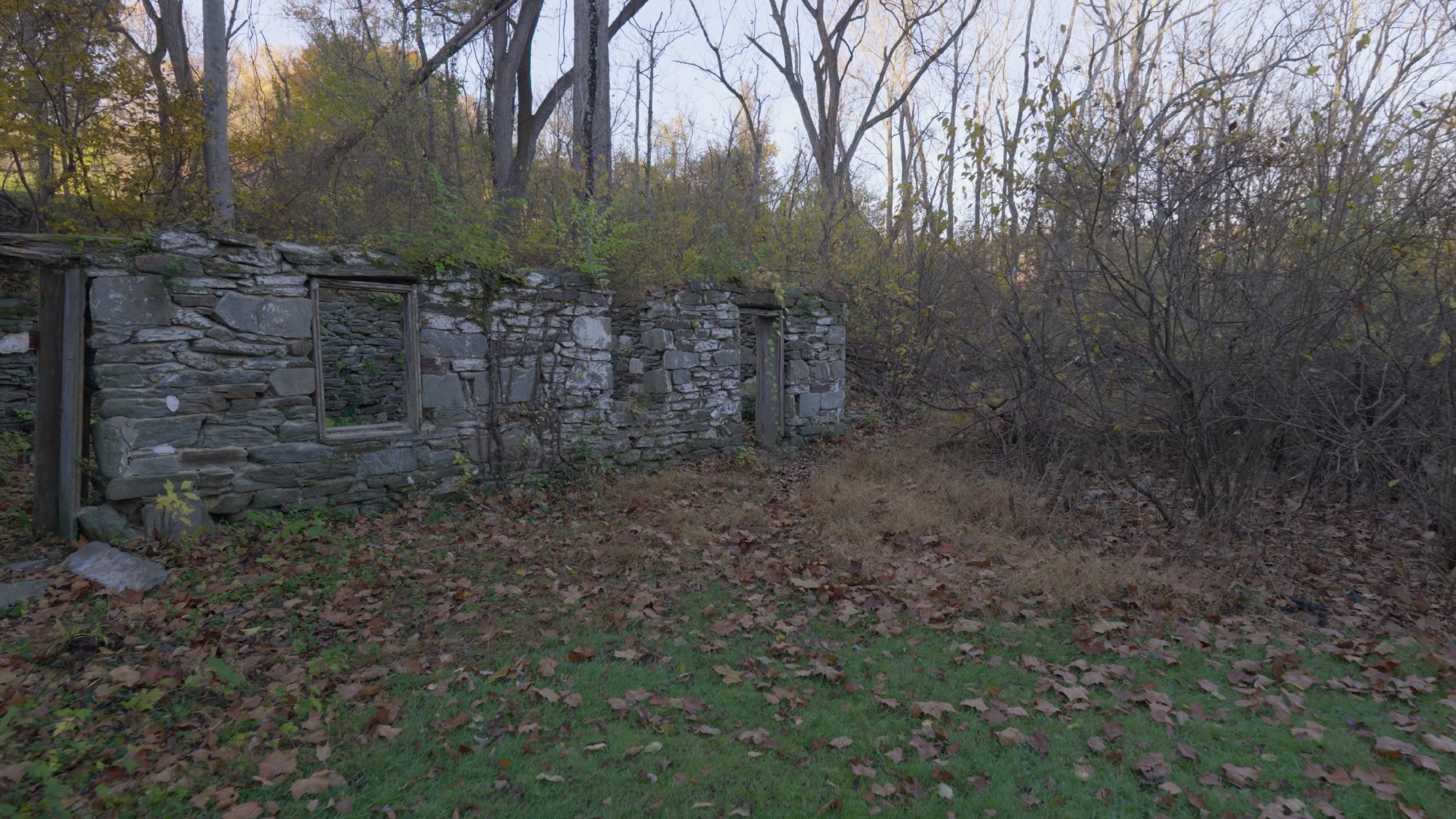
The town sat at the edges of the meadow north of what’s now the Nature Center. In 1850, the company built three boarding houses, each holding 14 to 20 single workers, who paid $1.75 a week for room and board out of an annual wage of around $200. In the 1850s it added a row of tenant houses rented to married miners and furnace workers. Many of the workers were Irish immigrants or formerly enslaved African Americans. Mining here had ended by the 1870s.
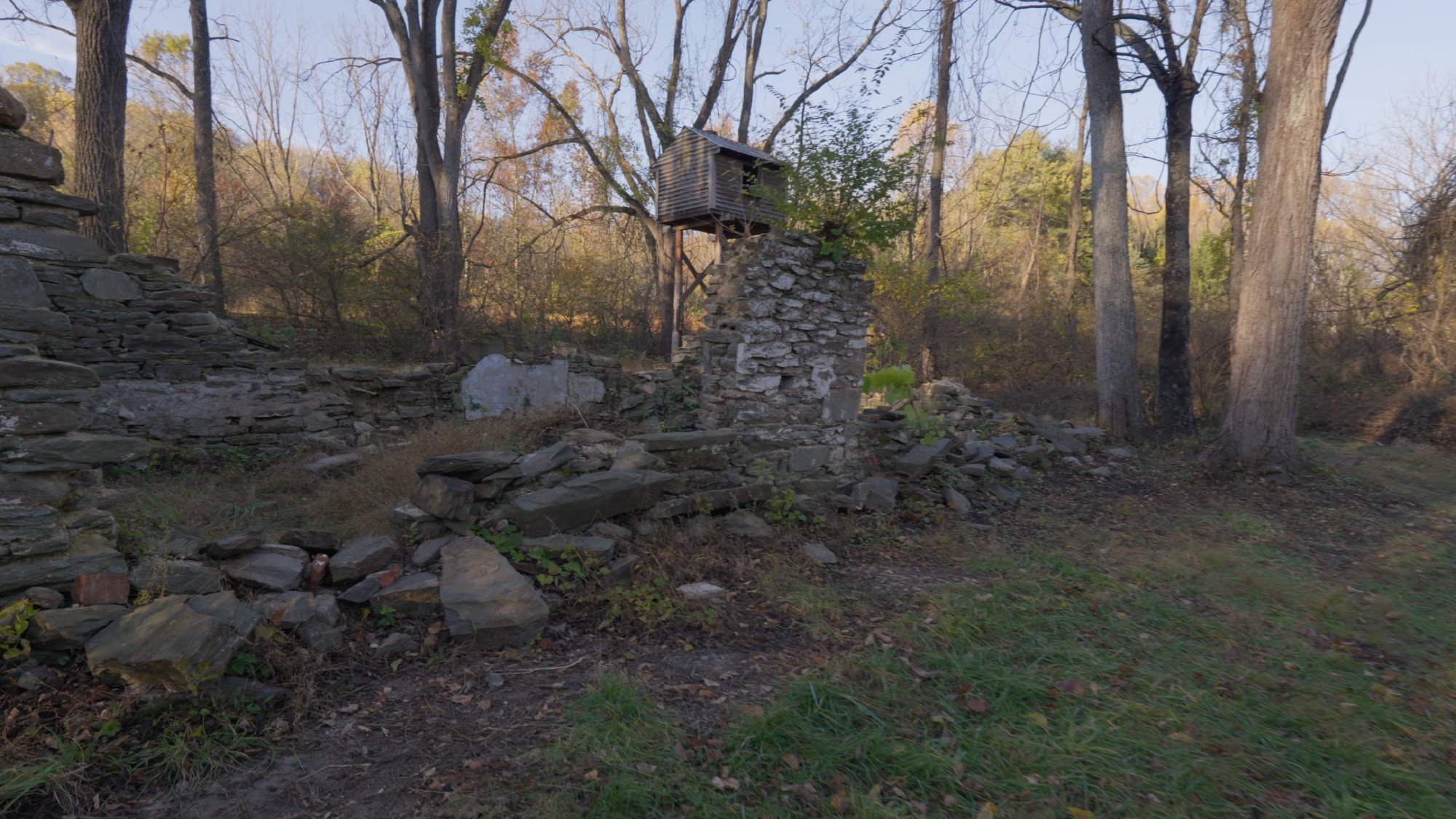
Little of the furnace survives beyond its base and scattered fire bricks and cut stone. Ruins of two boarding houses and the manager’s house remain, along with parts of the barnyard wall. The former company store building now houses a restaurant.
The Forest of Hope#
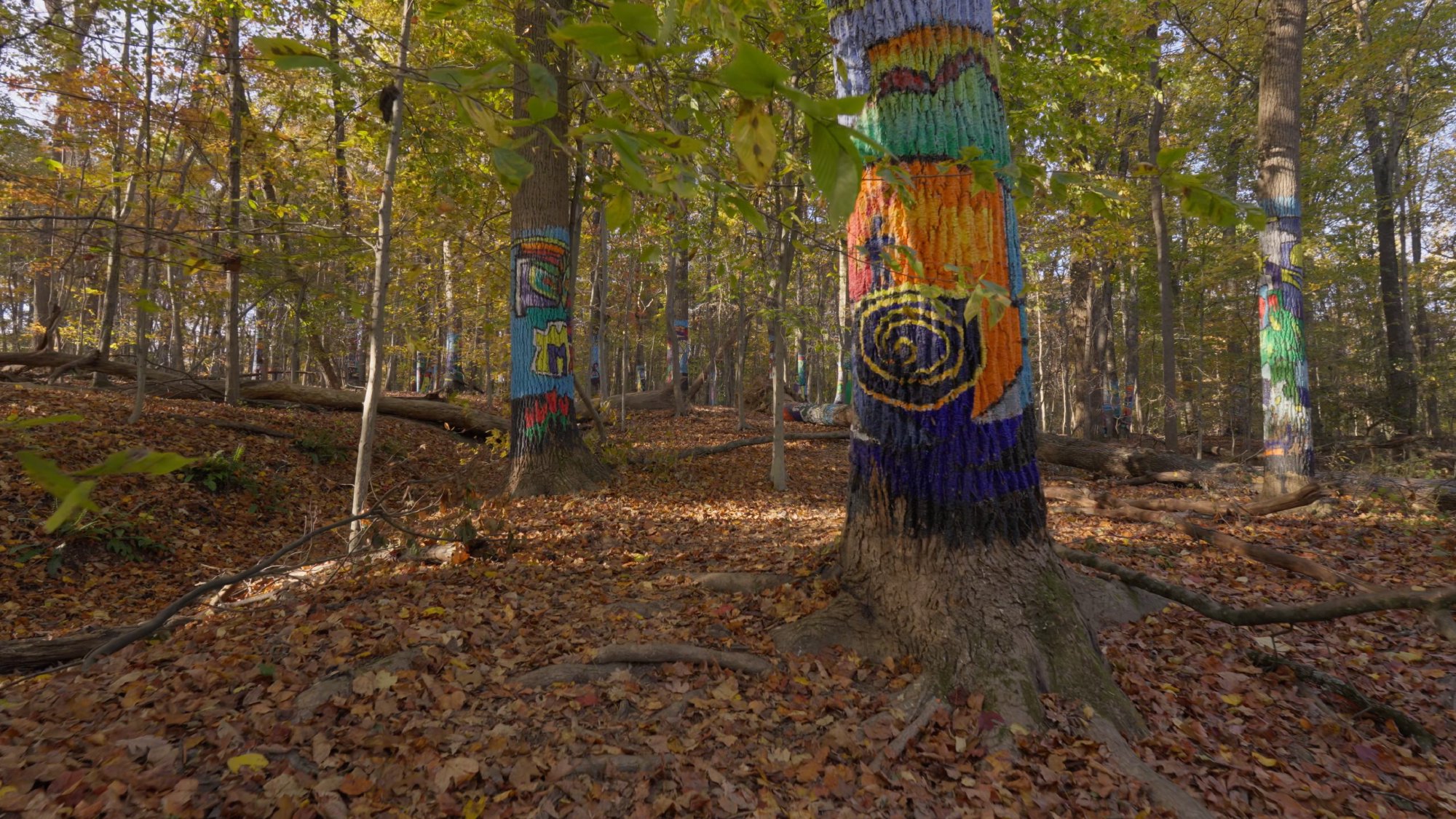
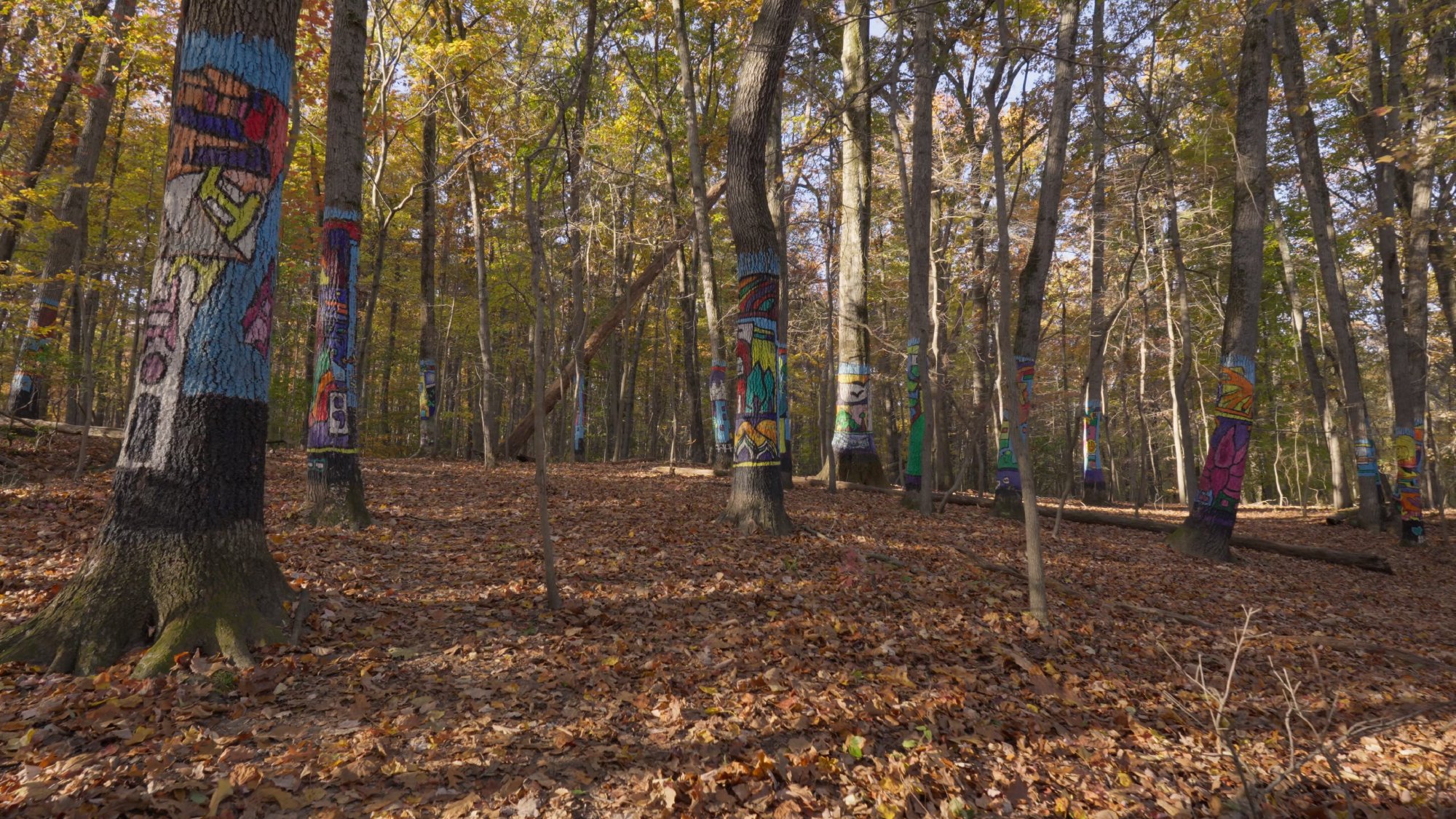
The painted trees along the Loggers Trail behind the Nature Center are the Forest of Hope, an art installation about recovery from addiction. In September 2017, the Nikki Perlow Foundation, named for a young woman who died of an accidental overdose in 2007, brought together about 50 teams of people in recovery, their families, and treatment centers. Each team painted a tree with a design telling its own recovery story.
The county parks department approved the project, but the volunteer council that advises the park said it hadn’t been consulted, and some biologists warned that the paint could stress the trees by sealing the pores in their bark. The county treated it as a one-time exhibit that won’t be repainted.
Good to know#
- Park in the lots off Beaver Dam Road between the Nature Center and the lake.
- The Nature Center is open daily from 9 am to 5 pm, except on Baltimore County holidays. The park is open sunrise to sunset. Restrooms are only available while the Nature Center is open.
- The Miners Trail and meadow paths tend to stay wet and muddy after rain. The climb from the meadow to the Loggers Trail is the only real hill.
- Dogs must be leashed. Bikes aren’t allowed on the trails, and swimming and fishing in the lake are prohibited.
- Oregon Ridge is a trash-free park, so carry out what you bring in.
Links#
- Friends of Oregon Ridge: Plan Your Visit
- Friends of Oregon Ridge: Trails
- Oregon Ridge Park trail map (PDF)
- Friends of Oregon Ridge: About Us
- Baltimore County: Oregon Ridge Nature Center
- BCPS Center for Archaeology: Oregon Town tour
- Baltimore Sun: Some call painted trees at Oregon Ridge Park an unwelcome surprise
- Wikipedia: Oregon Ridge Park